Picture a hypothetical Saturday. You bring home a yellow tang, float the bag, and release it into your reef. It looks perfect. Ten days later, white specks dust its fins. By the end of the month, the tang is gone, and so is the clownfish pair that had been healthy for two years. The damage was done by a parasite with a calendar, and you simply let it in.
Fish quarantine exists to beat that calendar. Behind most of these stories is one of a short list of organisms. Cryptocaryon irritans, the cause of marine white spot (“ich”), can cause acute damage and heavy mortality in aquarium fish [9]. Amyloodinium ocellatum, the velvet parasite, can produce disease with a “rapid onset over a period of a few days” [3]. The Merck Veterinary Manual lists Brooklynella among the saltwater ciliates, with signs such as fast breathing, excess mucus and flashing [5]. Monogeneans, parasitic flatworms often called “flukes”, include capsalids found on the skin and sometimes the eyes of marine fish [4].
So why not buy the fish and treat the display if something appears? Because the medicines that work are hostile to a reef. UF/IFAS states that “most invertebrates are highly sensitive to copper and will not survive a copper treatment” [2]. Carbonate materials such as coral, oyster shell and dolomite bind copper and change how much stays in solution [2], so in a display full of rock and sand, holding copper at a steady treatment level is hard to control. Ich also uses that rock: tanks, substrate and materials can act as “incubators” for its encysted stage [1].
Here is the whole fish quarantine protocol in six stages: what the parasite is doing at each step, and what you should be doing. For the biology in depth, see Marine Ich: the life cycle that decides the treatment and Marine Velvet: why it kills so fast.
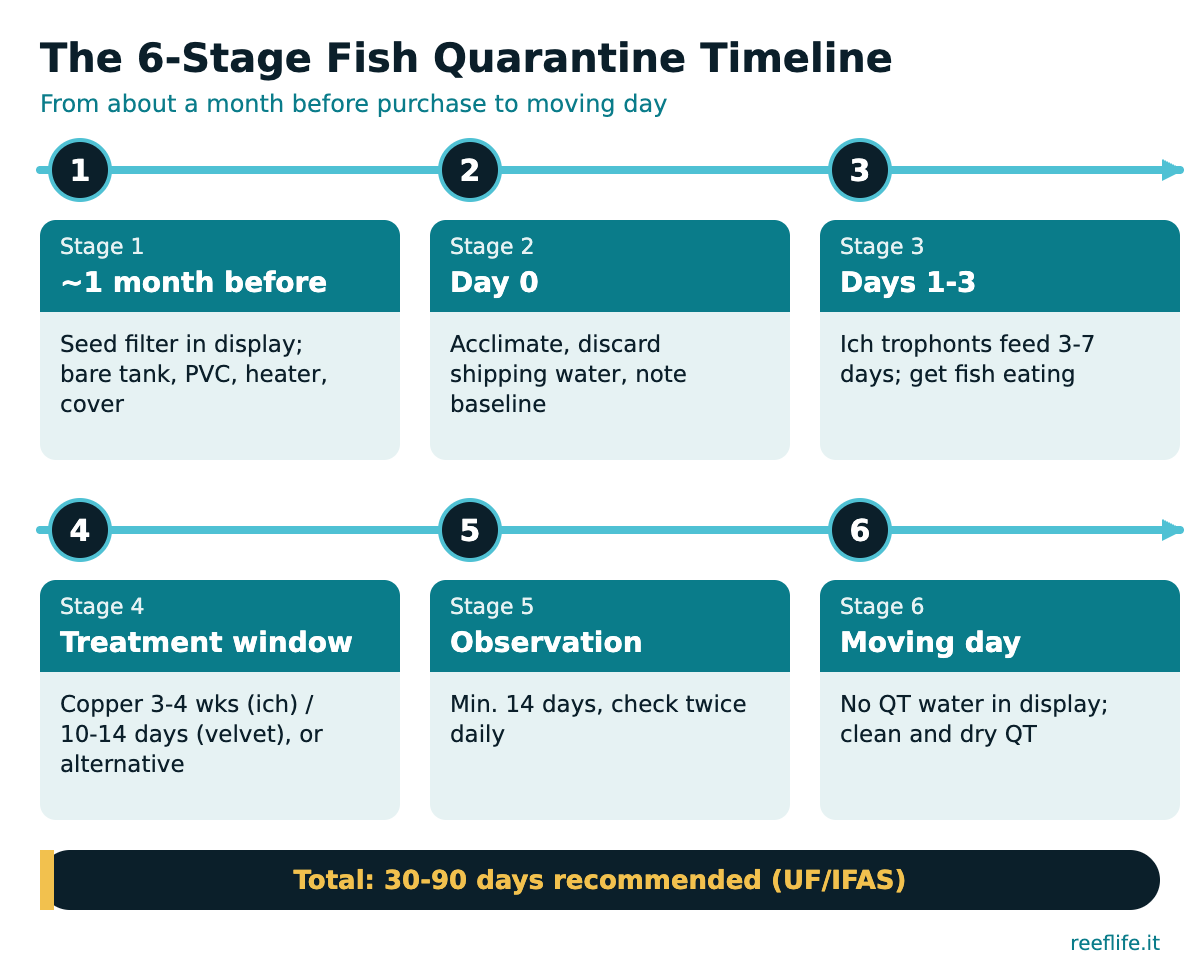
Stage 1, About a Month Ahead: Build a Quarantine Tank That Won’t Fight Your Medicine
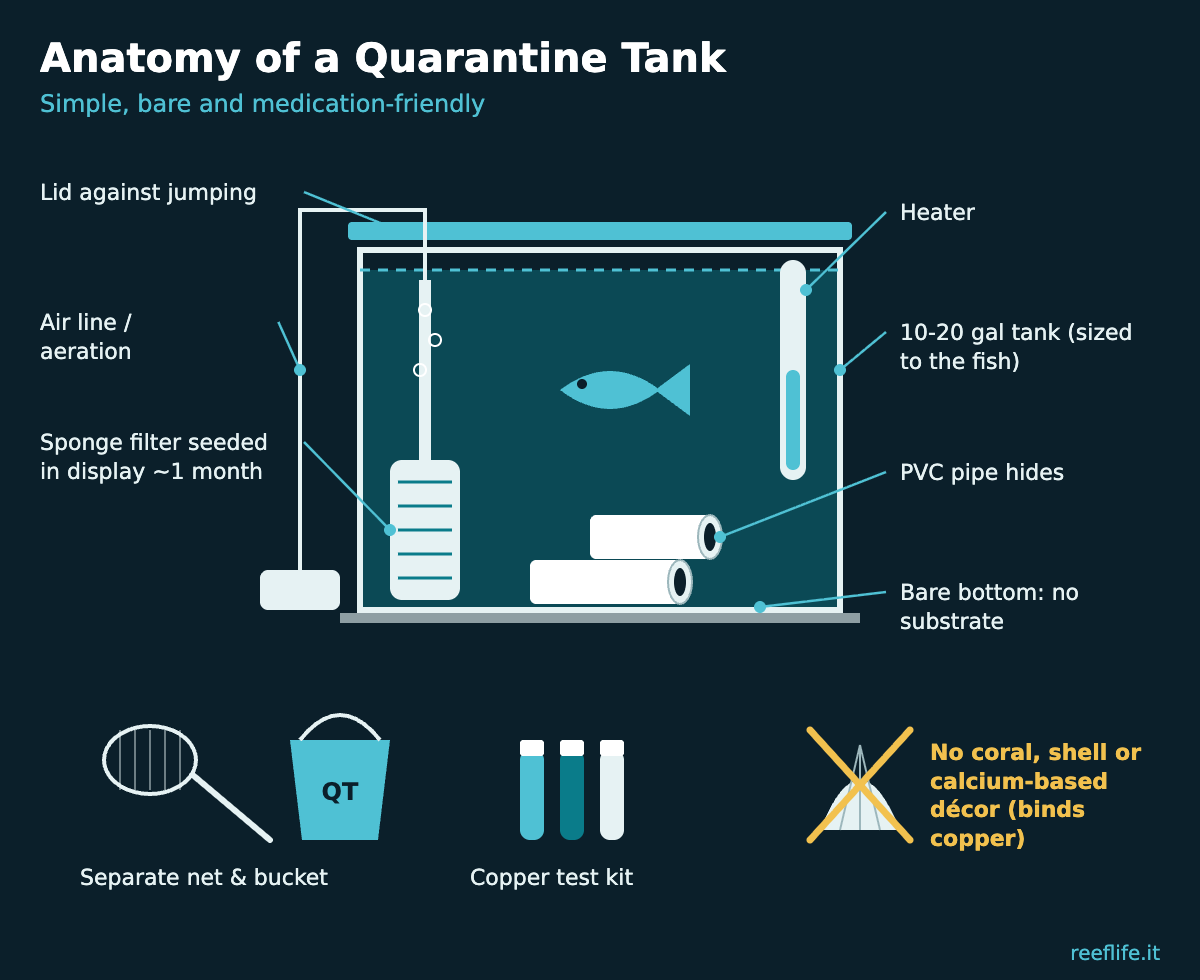
A fish quarantine tank is not a smaller reef. It is a hospital room: plain, easy to clean, and made of materials that leave medicine alone.
- Size: Quality Marine describes a basic marine fish QT as a “10-20 gallon aquarium” [7]. Jay Hemdal’s rule is that it must be “large enough to temporarily house the fish” you plan to add [6], so a large tang needs more room than a goby.
- No substrate: “No substrate should be used” [7]. A bare bottom shows uneaten food and waste, and removes a surface where ich cysts could rest [1].
- No calcium-based décor: Hemdal warns against calcium-based materials because they “will interfere with copper treatments” [6]. That is the same binding effect UF/IFAS describes for carbonate substrates [2]. Use PVC pipe or artificial décor that doesn’t absorb medication [6][7].
- Life support: a heater, aeration, a cover against jumping, and a biofilter [6][7]. Lighting can be minimal [7].
- A filter that is already alive: Hemdal suggests running a sponge or canister filter in your main aquarium “a month or so” before moving it to the quarantine system [6]. That month is why this stage starts weeks before you buy.
Keep the system separate. The Southern Regional Aquaculture Center (SRAC) is blunt that seawater arriving with new fish “should NEVER be introduced” into holding tanks or exhibits [3]. Hemdal also advises using dedicated tools for each system [6], so give the QT its own net, siphon and bucket, and label them.
Stage 2, Day 0: The Bag Water Stays Out
On arrival day, the fish brings two things home: itself and the water it was shipped in. Only one of them belongs in your tank. Acclimate the fish to the QT’s temperature and salinity, then net it out and throw the shipping water away [3].
Day 0 of fish quarantine is also your baseline. Before anything else happens, write down a few notes: how fast it is breathing, the condition of its fins, whether it is holding them clamped or spread, and whether its skin looks clear or cloudy. If spots or a velvety haze appear later in fish quarantine, a dated record will tell you what changed and when. In a survey of zoos and aquaria, every responding institution used visual health checks during fish quarantine [8].
Stage 3, Days 1–3: The Hitchhikers You Can’t See Yet
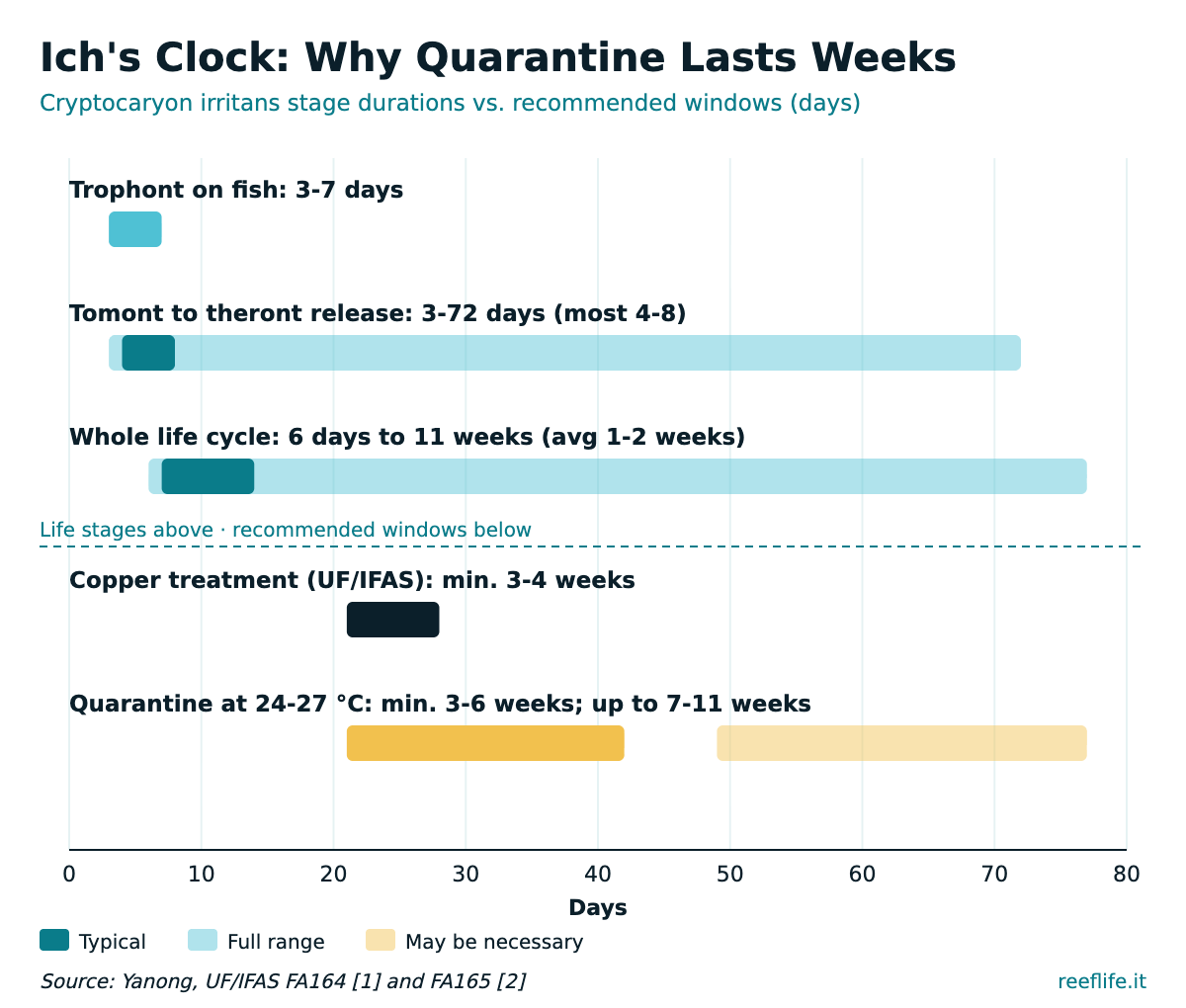
The first days of fish quarantine are deceptively quiet. If the fish picked up ich theronts at the wholesaler, the trophonts are now buried under its skin or gill tissue, feeding for “about 3–7 days” before they drop off [1]. A fish that looks clean on day 2 can be carrying a full load.
Velvet runs faster. SRAC reports that its life cycle “can be completed in as little as 3 to 6 days at 20 °C,” and a single trophont may produce up to 256 infective dinospores [3]. When gills are involved, look for rapid breathing, “piping” at the surface and a falling appetite [3].
Use these days to get the fish eating. A fish that feeds steadily is easier to medicate and to judge, so offer a variety of foods (see our guide to feeding marine reef aquarium fish). Then decide which path this fish takes.
Stage 4, The Treatment Window: Medicine Timed to a Parasite’s Clock
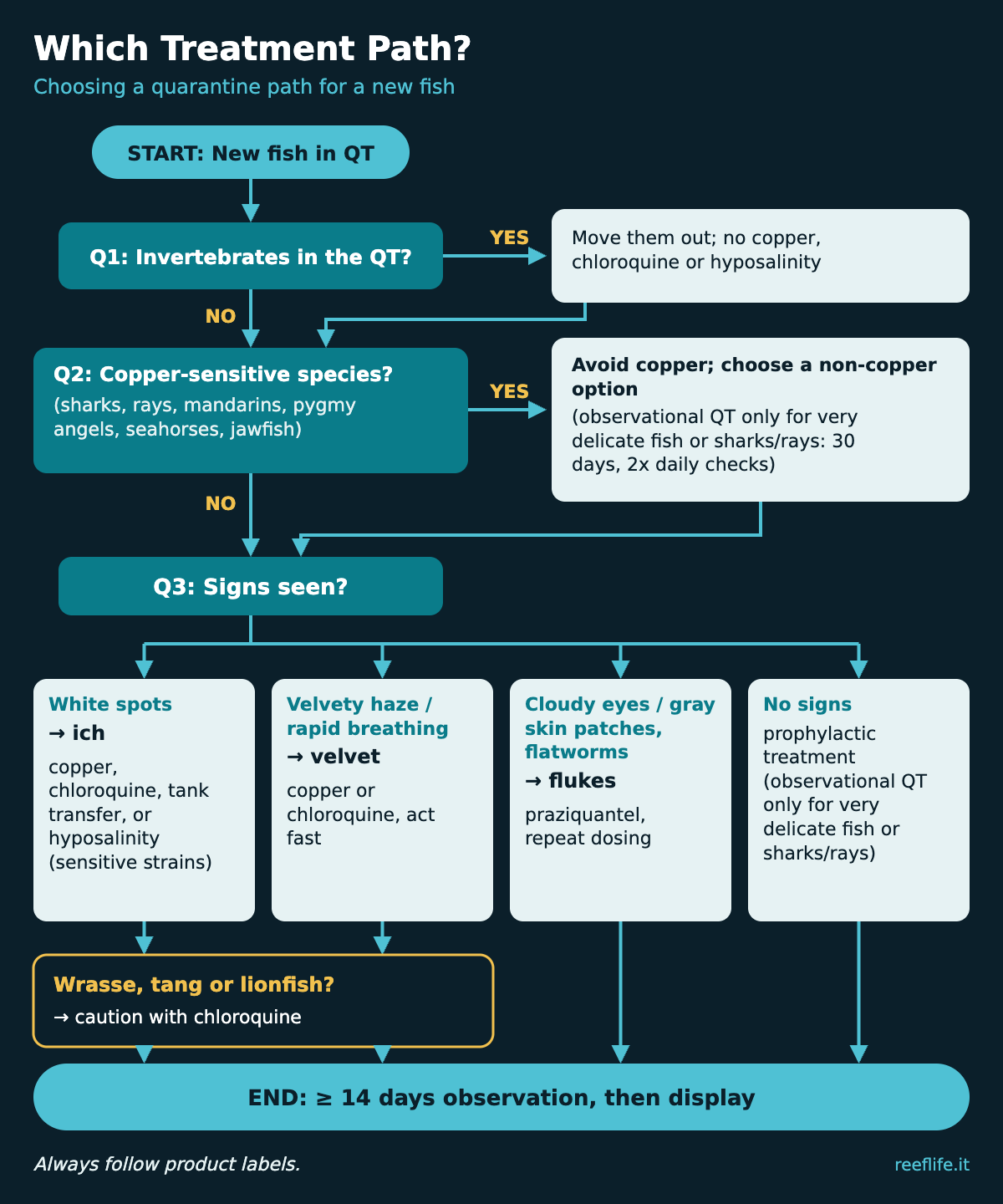
Prophylactic or observational fish quarantine?
There are two schools. In prophylactic quarantine, every new fish is treated whether or not it shows signs. In observational quarantine, you isolate and watch. Hemdal’s observational protocol is 30 days in isolation, with the fish inspected at least twice daily [6]. He reserves it for delicate species, such as flashlight fish, or for animals like sharks and rays that don’t pass disease to bony fishes [6]. In the zoo and aquarium survey, prophylactic baths and medicated feeds were common [8].
The length of treatment is set by the parasite’s biology, not by convenience. Ich tomonts released theronts anywhere from 3 to 72 days after forming, mostly at 4–8 days, and the whole cycle can run from 6 days to 11 weeks [1]. A treatment shorter than the slowest cyst simply waits for the parasite to hatch after it ends.
The main options compared
| Option | Main targets | Level / timing as published | Key cautions |
|---|---|---|---|
| Ionic copper (copper sulfate) | Ich, velvet | 0.15–0.20 mg/L free Cu²⁺, reached gradually over 2–3 days [2]; tested at least twice daily [2]; minimum 3–4 weeks for ich, 10–14 days for velvet [2] | Kills most invertebrates [2]; suppresses fish immune function [2]; some fish die below 0.15 mg/L [2] |
| Chelated copper | Ich, velvet | Varies by product; follow manufacturer’s directions [1] | Strength and activity “more uncertain” [2]; needs water changes to remove [2] |
| Chloroquine | Velvet, ich | 10 mg/L for 2–3 weeks or longer [1]; possible redose after 7–8 days [3]; Hemdal: 5 mg/L preventive, 8 mg/L standard [6] | For ich, Merck notes efficacy “not completely demonstrated” [5]; toxic to many invertebrates [6]; can raise ammonia [6]; wrasses, surgeonfish and lionfish are sensitive [6] |
| Hyposalinity | Ich (sensitive strains only) | 15 g/L for 21–30 days, lowered by 5–10 g/L per day [1] | Only works on sensitive strains [1]; most invertebrates can’t be present during it [6] |
| Tank transfer | Ich | Move to a clean, bare tank every 3 days; 3–5 moves depending on temperature [1] | Tanks must be cleaned and disinfected between moves [1]; impractical for large systems [1] |
| Praziquantel | Monogeneans (flukes) | 2–5 mg/L prolonged bath for 2–3 weeks [4]; Merck cites 5 mg/L [5] | Eggs resist treatment, so repeat dosing is needed [4]; not FDA-approved for fish [4] |
| Formalin | Brooklynella, monogeneans, velvet trophonts | Merck lists it for Brooklynella and as the only monogenean (fluke) option for food fish [5]; SRAC notes velvet tomonts survive it [3] | Hazardous chemical; use only per label or veterinary guidance |
Copper, done properly
For ionic copper, UF/IFAS gives a target of 0.15–0.20 mg/L free copper, reached over 2–3 days and checked at least twice a day [2]. Hemdal’s protocol holds 0.18–0.21 ppm for 14 days with no chemical filtration running [6]; for ich, UF/IFAS sets a longer minimum of 3–4 weeks at therapeutic level [2], so if ich is the target, use the longer figure. For chelated products, follow the manufacturer’s directions; UF/IFAS lists their treatment concentration simply as “varies” [1]. A test kit is required for copper quarantine. Dosing without measuring is guesswork, and the gap between an effective dose and a toxic one is narrow [3].
Copper-sensitive list. Hemdal names sharks, rays, mandarin fish, pygmy angelfish, seahorses and jawfish as sensitive to copper at levels as low as 0.15 ppm [6]. UF/IFAS warns that some fish “will die even at concentrations below therapeutic levels” [2]. Most invertebrates can’t tolerate ionic copper above 0.005 ppm [6]. Because most invertebrates will not survive a copper treatment [2], corals, shrimp, snails and crabs never go into a copper quarantine tank.
Flukes and other non-protozoans
For monogeneans, the treatment of choice in ornamental and aquarium fish is praziquantel [4]. Monogenean eggs are impervious to treatment, so repeated treatments are needed to kill the larvae as they hatch [4]; when formalin is used, Merck recommends multiple treatments at weekly intervals [5]. One more combination caution: chloroquine can push ammonia above 1 mg/L NH₃-N [6], so check ammonia whenever you medicate. Also, don’t stack drugs unless a published protocol does so explicitly.
Stage 5, The Quiet Weeks: What Observation Actually Means in Fish Quarantine
When the medication ends, the job isn’t over. Hemdal sets a minimum of 14 days of observation after treatment before any move [6]. Those two weeks give anything that survived time to show itself while the fish is still easy to catch and treat.
Observation means:
- looking at the fish at least twice a day, the inspection rate Hemdal sets for observational quarantine [6], in good light, on both flanks;
- watching the breathing rate and any piping, flashing or rubbing [3][5];
- checking for cloudy or swollen eyes and gray patches on the skin, which can signal capsalid flukes, a group found on the skin and occasionally the eyes of marine fish [4];
- confirming the fish is eating every day.
How long should fish quarantine last overall? UF/IFAS advises a minimum of 3–6 weeks at 24–27 °C for ich, notes that 7–11 weeks may be needed, and recommends 30–90 days before new fish join an established population [1]. For flukes, UF/IFAS says “ideally” at least four weeks [4]. Among the zoos and aquaria surveyed, 95% had a minimum quarantine of 30 days or more [8]. SRAC adds that, although 30 days is often suggested as a minimum, this “may not be sufficient to prevent the introduction of A. ocellatum” [3]. In my view, the extra weeks are cheap compared with losing a whole display.
Warmth affects how fast all of this happens. Ich grows best at roughly 23–30 °C, and active infections have been documented at 15 °C [1]. Temperature also changes the pace, which is why UF/IFAS says the number of tank-transfer moves depends on it [1]. In one study, dormant stages survived 4–5 months at 12 °C and then infected fish after warming to 27 °C [1].
A Side Note on the Same Calendar: Corals and Invertebrates
This article is about fish, but the threat isn’t limited to them. UF/IFAS recommends quarantining marine plants, invertebrates, live rock and substrate because they can harbor ich tomonts [1]. Corals have their own pests: Quality Marine describes prophylactic dips against Acropora-eating flatworms and notes that “several subsequent dips are required” because eggs seem to survive [7]. Keep invertebrates out of the fish quarantine tank: copper cannot be used with invertebrates present, chloroquine is toxic to many invertebrates, and most invertebrates cannot be present during hyposalinity [6].
Stage 6, Moving Day: The Last Fish Quarantine Mistake to Avoid
The final move is short but easy to get wrong:
- Leave the medicine behind. Net the fish and don’t pour any QT water into the display. Activated carbon removes dissolved free copper [2], so strip copper from the QT afterward if invertebrates will ever use it. UF/IFAS says invertebrates shouldn’t return to a copper-treated system until free copper is 0.01 mg/L or less, “but ideally zero” [2].
- Treat any final dip as a filter, not a cure. Quality Marine mentions that many aquarists give a three-minute freshwater dip at matching temperature and pH before moving fish to the display [7]. UF/IFAS cautions that dipping “will not completely eliminate the risk” of bringing in parasites [4].
- Reset the QT. Rinse sponge filters with freshwater and let them dry before reusing them [7]. Clean the tank, since ich cysts can survive on tank surfaces and materials [1].
- Remember the display can bite back. UF/IFAS notes that carriers in an established population can infect new fish, even quarantined ones [1]. Quarantine protects the display from the new fish. It can’t protect the new fish from a display that is already infected.
If disease appears later, see our overview of common fish diseases in a marine aquarium.
Your Fish Quarantine Checklist
- ☐ QT seeded about a month ahead with a filter from the display [6]
- ☐ Bare bottom, PVC hides, no calcium-based décor [6][7]
- ☐ Heater, aeration, cover; separate tools; shipping water discarded [3][6][7]
- ☐ Day 0 baseline notes written down
- ☐ Treatment chosen to match the parasite and the species (check the copper-sensitive list) [2][6]
- ☐ Copper tested at least twice daily, if used [2]
- ☐ At least 14 days of observation after treatment [6]; total fish quarantine of 30 days or more [1][8]
- ☐ No QT water enters the display; QT tank cleaned [1]; sponge filter rinsed in freshwater and dried [7]
References
- Yanong, R. P. E. (2009, revised 2012; reviewed 2024). Cryptocaryon irritans Infections (Marine White Spot Disease) in Fish (FA164). UF/IFAS Extension, University of Florida. DOI: 10.32473/edis-fa164-2009. https://ask.ifas.ufl.edu/publication/FA164/pdf
- Yanong, R. P. E. (2010, revised 2024). Use of Copper in Marine Aquaculture and Aquarium Systems (FA165). UF/IFAS Extension, University of Florida. https://ask.ifas.ufl.edu/publication/FA165/pdf
- Francis-Floyd, R., & Floyd, M. R. (2011). Amyloodinium ocellatum, an Important Parasite of Cultured Marine Fish (SRAC Publication No. 4705). Southern Regional Aquaculture Center. https://srac.tamu.edu/fact-sheets/serve/227
- Francis-Floyd, R., Klinger, R., Petty, D., & Pouder, D. (2023 revision). Monogenean Parasites of Fish (FA28). UF/IFAS Extension, University of Florida. https://ask.ifas.ufl.edu/publication/FA033/pdf
- Petty, B. D., Francis-Floyd, R., & Yanong, R. P. E. (full review 2022). Parasitic Diseases of Fish. Merck Veterinary Manual, Exotic and Laboratory Animals: Aquarium Fish. https://www.merckvetmanual.com/exotic-and-laboratory-animals/aquarium-fishes/parasitic-diseases-of-fish
- Hemdal, J. (n.d., © 2020). How to Quarantine Saltwater Fish. Tropical Fish Hobbyist Magazine. https://www.tfhmagazine.com/articles/saltwater/how-to-quarantine-saltwater-fish
- Quality Marine Staff (2011, May 16). Revisited: Quarantine Procedures for Fish and Invertebrates. Quality Marine. https://www.qualitymarine.com/news/revisited-quarantine-procedures-for-fish-and-invertebrates/
- Hadfield, C. A., & Clayton, L. A. (2011). Fish quarantine: current practices in public zoos and aquaria. Journal of Zoo and Wildlife Medicine, 42(4), 641–650. DOI: 10.1638/2011-0034.1. https://heronetnext.epa.gov/reference/1983937
- Colorni, A., & Burgess, P. (1997). Cryptocaryon irritans Brown 1951, the cause of “white spot disease” in marine fish: an update. Aquarium Sciences and Conservation, 1(4), 217–238. DOI: 10.1023/A:1018360323287. https://link.springer.com/article/10.1023/A:1018360323287
About the author: AVen (Alessandro) keeps reef aquariums and writes ReefLife. More about AVen.