To begin a marine reef aquarium using the Deep Sand Bed (DSB) technique is perhaps one of the most captivating and gratifying experiences for the serious marine aquarium hobbyist. For me personally, the DSB technique has always represented the closest to reproducing natural marine communities as is possible. In the course of this paper, I will outline the step-by-step process of mature material buildup in a reef aquarium, with the utilization of 20 kg live rocks, 20 kg dead rocks, and two kg sand from an established and mature DSB system which has been in service sometimes over several years.
I initiated the process with the addition of about 5-6 cm water precisely adjusted to the desired salinity (35‰) and held at the temperature of 25°C. Next, I incrementally added sand, using Oolite sand with the extremely fine grains and rounded biogenic calcium carbonate particles. This is an important selection as it will enable the provision of critical anaerobic zones deep in the substrate to enhance the process of denitrification, which is critical to chemical system stability.
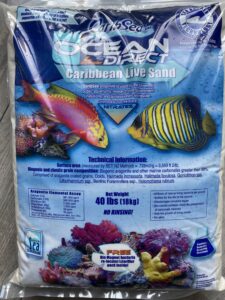

When the desired substrate thickness of about 15 cm had been attained, I delicately drilled a small hole in one corner of the aquarium to drain the cloudy water incurred during sand installation. It is important to do this to avoid ongoing cloudiness, which would decrease visibility and hinder early observations.
Adding approximately 2 kg biologically mature sand from an existing DSB system to the subsequent phase constituted the next step. Mature sand is used as a microbial inoculum, directly adding in a ready made varied population of denitrifying bacteria as well as microbial organisms, greatly enhancing the biological maturity of the substrate.
I then added 20 kg of live rocks, characterized by high microbial and microfaunal diversity, coralline algae, and microfaunal organisms already inhabiting them, with the addition of 20 kg of dead rocks. Live rocks act as an initial biological inoculum, greatly enhancing the colonization of microorganisms and immediately initiating the critical biogeochemical nitrogen cycle.
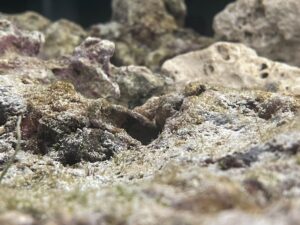

The positioning of the rocks was carefully designed to minimize direct contact with the surface of the DSB to maintain its viability. The positioning ensures the surface structure of the substrate is intact, enabling important gas exchanges to occur as well as the viable functioning of aerobic as well as anaerobic bacteria.
During this stage, the nitrogen cycle emerges, which includes:
- Ammonification: conversion of organic matter into ammonia (NH₃/NH₄⁺).
- Nitrification: conversion of ammonia into nitrites (NO₂⁻) initially and then into nitrates (NO₃⁻) by aerobic bacteria.
- Denitrification: nitrate reduction to nitrogen gas (N₂) through the action of anaerobic bacteria found in the lower strata of the DSB.
Lasting usually from 4 to 6 weeks, the process was closely followed using routine chemical analysis to detect ammonia, nitrites, and nitrates, watching as spikes early on were followed by gradual stabilization.
In my experience, within about two weeks, filamentous algae developed a common occurrence resulting from temporary imbalances in nutrients. Diatoms and other pioneer organisms accompany this phase, which persists from several to several weeks. When the initial setup is completed, I recommend lightly seeding the microbial population with the addition of the smallest pinch of good quality granular food to the water column every other day. Second, I add a mussel or piece of uncooked shrimp directly under the surface in the Deep Sand Bed. The intended organic material addition serves as an effective nutrient stromatolite or catalyst, which promotes rapid colonization by the heterotrophic bacteria. Gradual breakdown of the shrimp or mussel provides a localized, sustained input of nitrogenous material primarily ammonia which energizes and accelerates the ammonification, followed by the subsequent nitrification, processes in the nitrogen cycle. To boot, adding it just beneath the substrate ensures aerobic as well as anaerobic areas will form and activate. It effectively “feeds” the biological equipment in the DSB and primes the pump for a robust and self sustained microscopic community in anticipation of the addition of livestock

Throughout the time, I sequentially introduced detritivorous snails, copepods, as well as small herbivorous fish like the Salaria, which biologically control algal overgrowths effectively. These organisms have beneficial impacts on microbial as well as faunal assemblages, which enhance the rate of ecological maturity and actively work towards the aquarium’s dynamic balance.
Having ascertained the existence of stable and consistent chemical and biological regimes, I incrementally introduced marine fauna and basic SPS corals. Incorporation of higher organisms is a profound environmental stimulus, which stimulates the processes of decomposition and denitrification, as well as further stabilizes the microbial and faunal networks in the substrate and rocks.
Water quality was continually monitored, emphasizing key parameters known as the “balanced triad”:
| Parameter | Ideal Range |
|---|---|
| Calcium (Ca) | 420 – 440 mg/L |
| Magnesium (Mg) | 1300 – 1350 mg/L |
| Alkalinity (KH) | 7 – 9 dKH |
Sustaining these optimal levels is conducive to healthy, resilient coral growth, allowing long term biodiversity management.

Starting and maintaining a marine aquarium with the DSB means going beyond technical protocol; it is an in depth experience of learning about and engaging with sophisticated ecological processes. By working with live rocks and mature sand from established balanced systems, it is easily possible to speed the process of maturation to achieve long term biological and ecological equilibrium. The resulting outcome provides an exclusive, satisfying experience to see and experience in close up at home the living, active part of the coral reef ecosystem, to further develop, if you will, human understanding and appreciation of marine diversity.


About Author
